
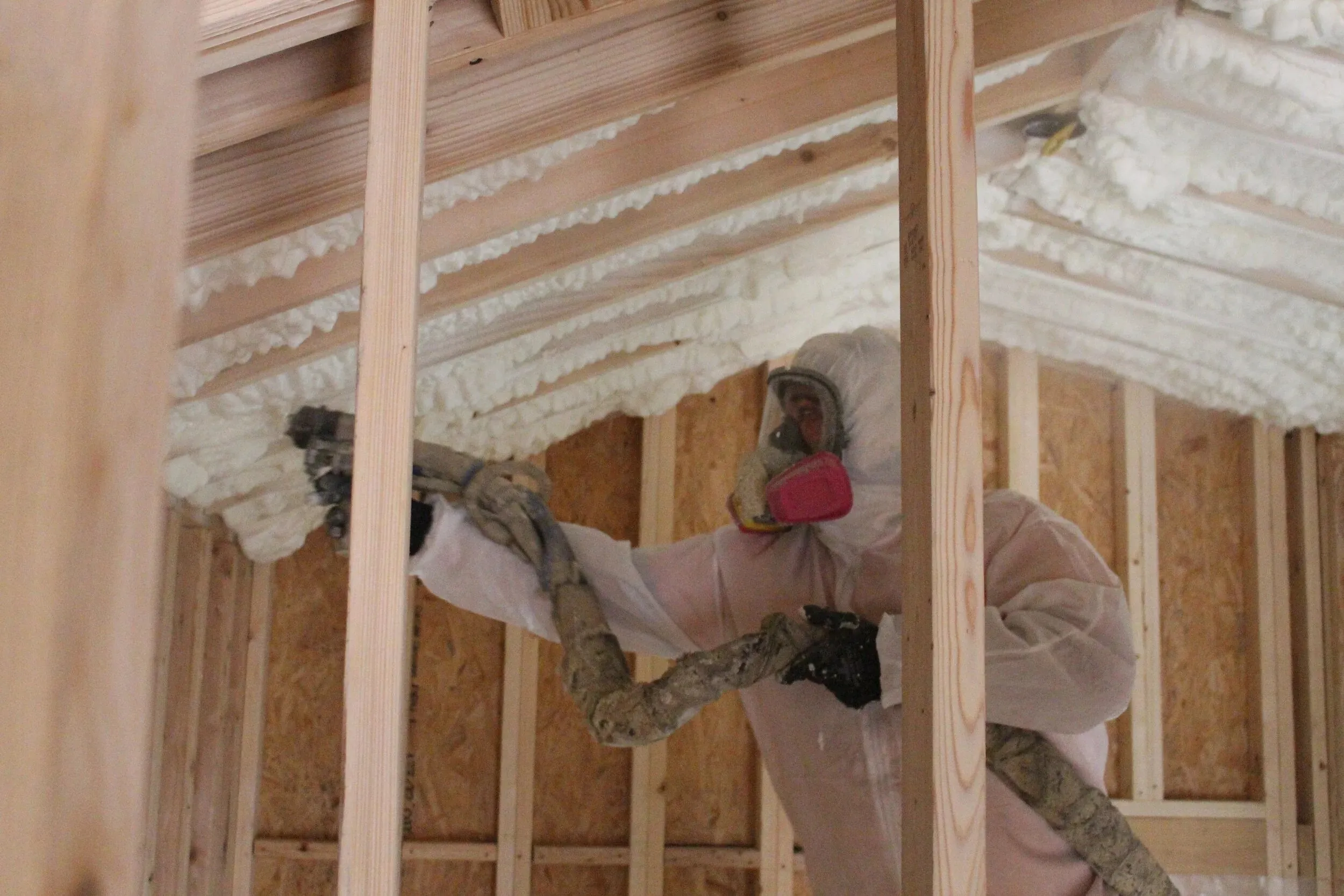
Why Spray Foam?
Spray foam is not only an insulation product. When used correctly, it can also help control air movement through parts of the building envelope.
Insulation Is Part of a Larger Envelope
Your roof, attic, walls, floors, crawl space, doors, windows, and mechanical systems all influence comfort. Insulation is one part of that system.
Traditional insulation mainly slows heat transfer. Spray foam can also help seal small gaps and transitions when it is installed as part of the right assembly.
That difference can matter in Wichita because wind, hot summers, cold winter conditions, and humid stretches can all make air leakage easier to feel.
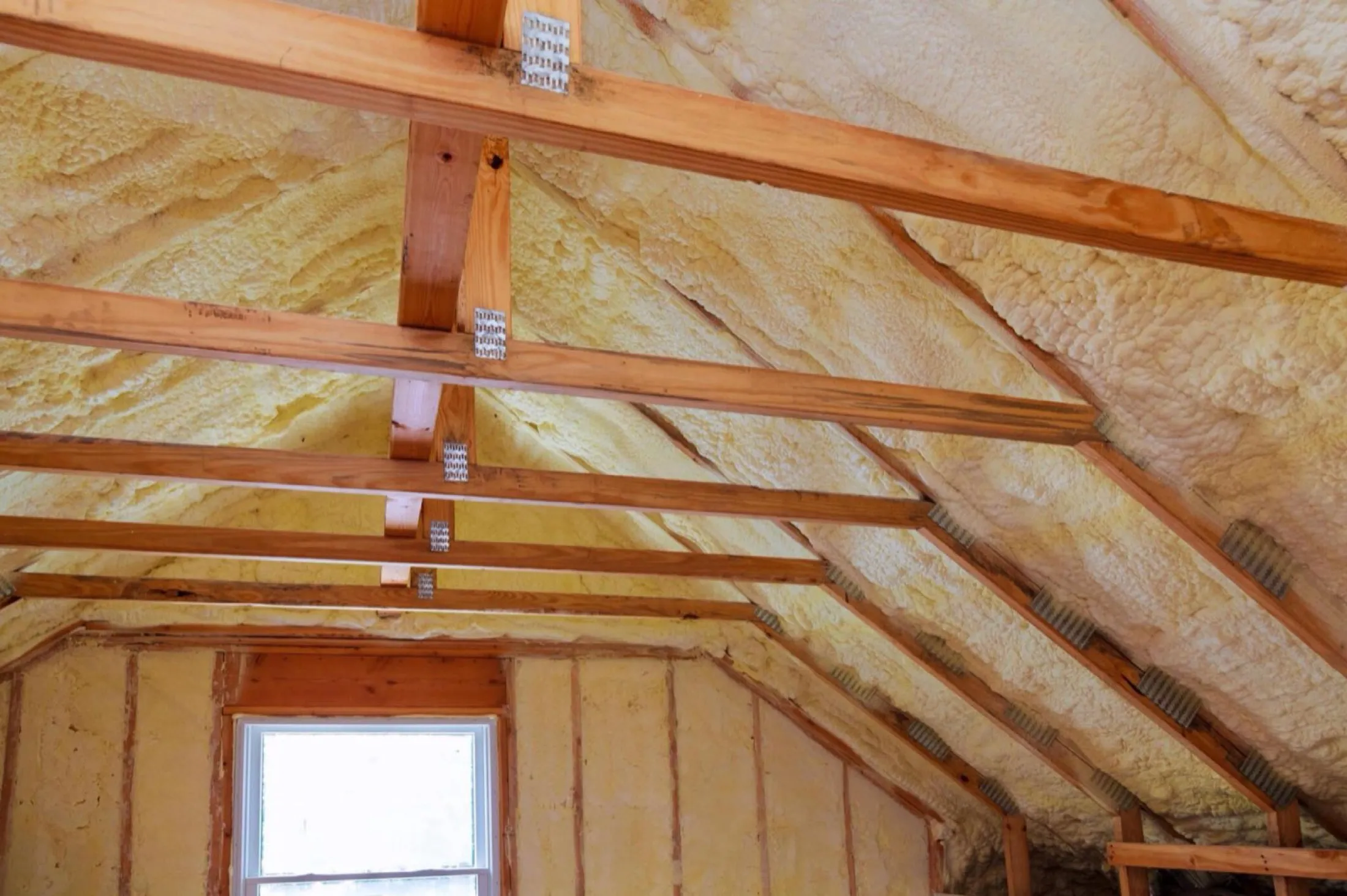
Spray Foam Is Different, Not Automatically Better
Spray foam
Expands into gaps, can insulate and help air-seal, requires professional installation, and often has a higher initial cost.
Blown-in insulation
Useful for many attic coverage projects, especially when depth and broad coverage are the main goals.
Batt insulation
Can fit framed cavities well when cut and installed carefully without gaps or compression.
The right choice depends on the building, the assembly, and what the project needs to accomplish.

Two Foams, Different Uses
Open-cell foam is lower-density and expands significantly. Closed-cell foam is denser and behaves differently around depth, rigidity, and moisture strategy.
The better question is not which product sounds stronger. It is where the foam is going, what the assembly needs, and whether spray foam is the right approach at all.
Spray foam insulation is often part of attic, wall, crawl space, metal building, and commercial conversations, but it should be chosen with context.
Good Guidance Can Say "Not Yet"
Some buildings need more evaluation before a recommendation makes sense. Existing insulation condition, moisture, access, roof design, ventilation, and the project goal can all change the answer.
If the main concern is an attic, start with attic insulation. If the space is below the floor, start with crawl space insulation. If the project is a shop or steel structure, review metal building insulation.
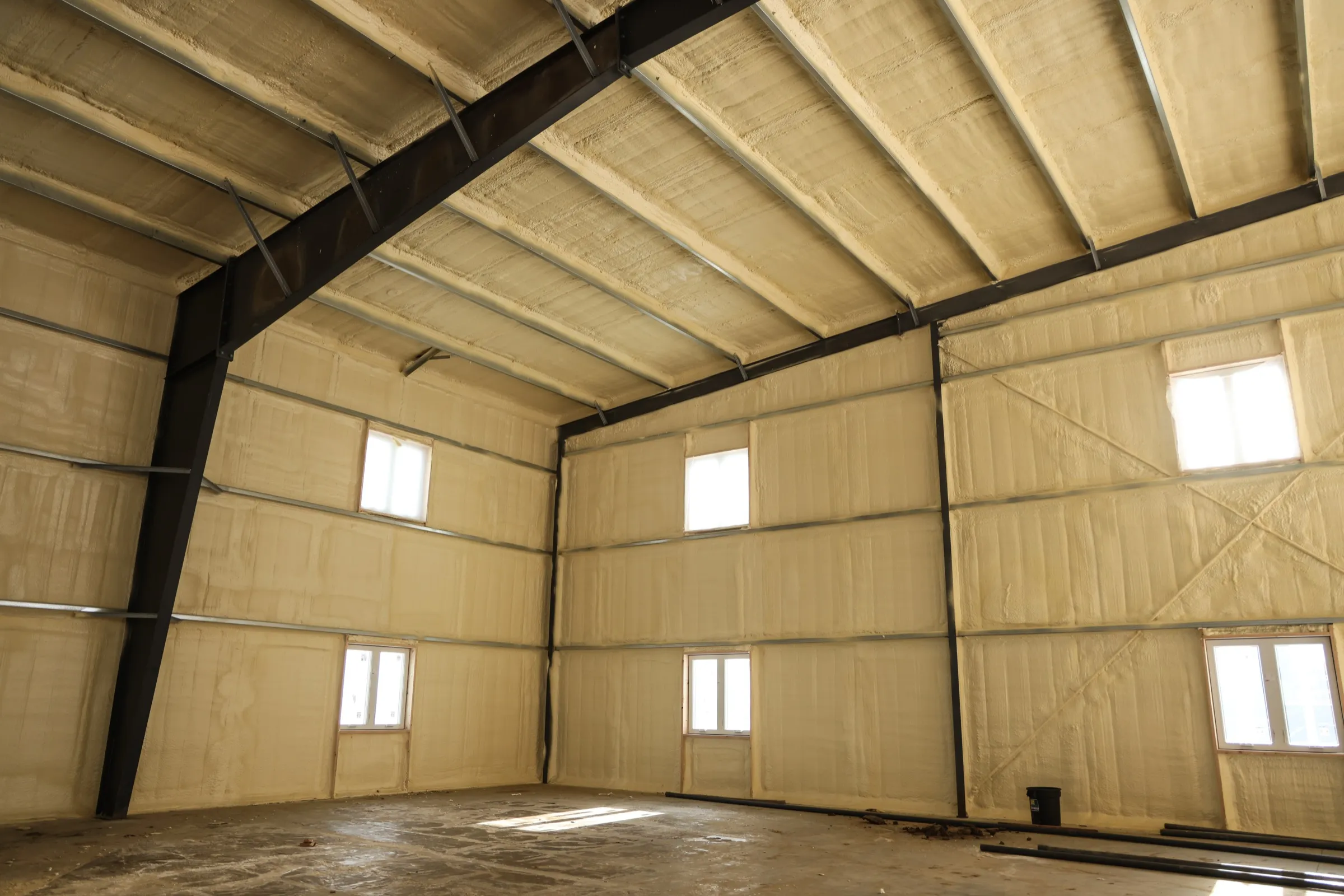
Start With the Area You Need Insulated
Spray foam is one option. The service pages below help compare other insulation paths that may fit the building better.
Questions People Ask Before Choosing Spray Foam
What does spray foam do differently?
Spray foam can provide insulation and help reduce air movement where it is properly applied. That combination is the reason it is often considered for irregular framing, roof decks, rim areas, and metal buildings.
Is open-cell or closed-cell spray foam better?
Neither is automatically better. The right material depends on the assembly, available depth, moisture strategy, project goal, and budget.
Can traditional insulation still make sense?
Yes. Fiberglass, cellulose, batt, and blown-in insulation can all make sense in the right assembly. Spray foam is not the right answer for every project.
Why does air sealing matter?
Air movement can carry heat, humidity, dust, and comfort problems through small gaps. Insulation and air control should be considered together when the building shows those symptoms.
You Do Not Have to Choose the Material First
Describe the building and the comfort issue. Top Tier Insulation Solutions can help you start with the right question.